
Quick Answer
Picture it. You crushed leg day, or finished a long run, or played three sets of padel in the Dubai evening. You feel unstoppable, right up until you meet the stairs. Suddenly every step down is a negotiation, and the walk to the car feels like a marathon of its own. Heavy, tired legs are one of the most common post-workout complaints, and good leg recovery does not need to be complicated.
Here are six easy options, from compression therapy and massage to infrared sauna, stretching and the right food, so you can pick what fits your week.
Taking on the challenge this month? These pair nicely with the Dubai Fitness Challenge recovery tips.
Why Do Your Legs Feel Heavy After a Workout?
Your legs do the heavy lifting in almost every sport, so they are the first to send the complaint. Heavy legs after a workout are usually one of two things. Muscle fatigue shows up straight away and fades within a day. Delayed onset muscle soreness (DOMS) is the sneaky one that arrives later and commonly peaks around 24 to 72 hours after exercise. Both are normal, and neither should feel sharp.
6 Easy Ways to Help Tired Legs Recover
The easiest ways to help tired legs recover are leg compression, a sports recovery session, therapeutic deep tissue massage, infrared sauna or contrast therapy, assisted stretching and good nutrition. Research supports massage most strongly, while compression and infrared sauna show promising but limited results. Ready? Let's go.
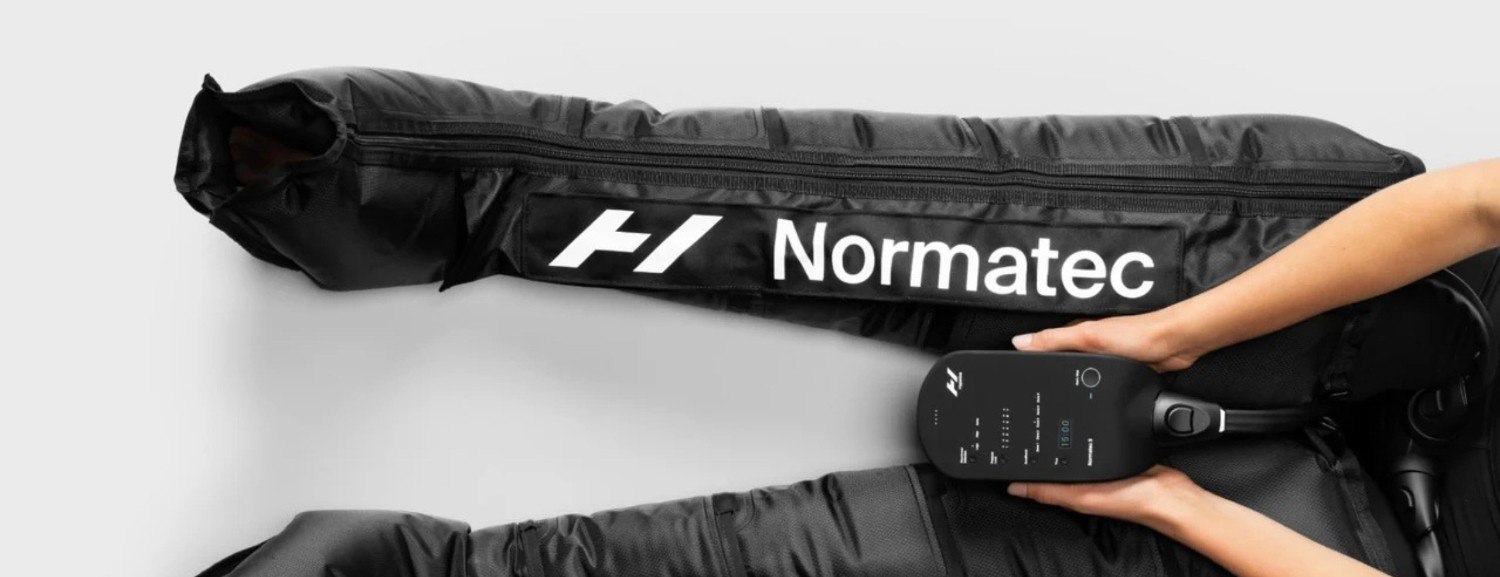
1. Leg Compression Sessions (Normatec): Do Compression Boots Help Muscle Recovery?
Think of it as a hug for your legs. Popular among athletes, compression boots use rhythmic pressure to support healthy circulation and help reduce muscle soreness. A 2024 systematic review of lower-limb intermittent pneumatic compression (Maia et al., Biology of Sport) found possible benefits for perceived soreness, while results on muscle damage markers varied. It is a relaxing, hands-free extra after a long run, not a miracle.
2. A Sports Recovery Session With Recovery Tools
Not sure where to begin? This one is the all-rounder. A sports recovery session pairs you with a trained practitioner and recovery tools, and the plan is built around your training week, so no guesswork. It suits gym-goers, runners and padel players who train often. Peek at the sports recovery sessions at Wellnest to see how it works.
3. Therapeutic Deep Tissue Massage: Does Massage Help Tired Legs?
Yes, it can, and this is the star of the list. A 2018 systematic review and meta-analysis by Dupuy and colleagues in Frontiers in Physiology ranked massage as the most effective post-exercise technique for easing DOMS and fatigue. Therapeutic deep tissue massage goes to work on the quads, hamstrings and calves. It can feel firm, so tell your therapist how much pressure you like.
4. Infrared Sauna and Contrast Therapy: Is Infrared Sauna Good for Muscle Recovery?
Infrared sauna uses infrared wavelengths to warm the body, stimulate blood circulation and support the body's natural cellular repair processes. In a small 2023 study of 16 male basketball players (Ahokas et al., Biology of Sport), an infrared sauna session after training reduced muscle soreness and softened the drop in jump performance. Some people alternate the heat with cold exposure, known as contrast therapy, for added benefits. Explore how a full-spectrum infrared sauna can complement your recovery routine.
5. Assisted Stretching Session
Picture someone else doing the stretching while you simply breathe. A trained practitioner can take your stretching further than you could comfortably achieve on your own. Assisted stretching helps legs feel looser and more relaxed, and it’s a treat for stiff hips and a tight lower back after a long day at a desk. While a Cochrane review found that stretching does not significantly reduce post-exercise muscle soreness, its benefits for mobility and flexibility make it valuable for both active and sedentary lifestyles.
6. Nutrition for Leg Recovery: Protein and BCAAs
Yes, dinner counts as recovery. Your muscles need protein to repair, and theISSN position stand suggests most active people do well with about 1.4 to 2.0 grams per kilogram of body weight a day, spread across meals. Eggs, chicken, fish, yoghurt, lentils and tofu all do the job, and they already contain BCAAs.
Which Leg Recovery Option Is Right for You?
Book a recovery session at Wellnest, Dubai
Everyday Habits That Support Leg Recovery
The best part? Some of the most effective options are free. Keep a steady bedtime, sip water through the day (Dubai's heat is not kidding) and take an easy walk on rest days to keep your legs moving.
When to See a Doctor
Heavy legs usually settle on their own. See a doctor for sharp pain, swelling, one-sided calf pain or pain that does not ease. For recurring muscle pain and stiffness, manual therapy offers a hands-on approach to relieving tension and improving mobility.
Frequently Asked Questions
How long do heavy legs take to recover?
DOMS commonly peaks around 24 to 72 hours after exercise, then fades. If heaviness lasts longer or gets worse, speak to a doctor.
Is it OK to train with tired legs?
Light movement is usually fine. If your legs feel like wet sand, choose an easier session or a rest day.
Can I combine these options?
Absolutely. Many people pair a sports recovery session with good food and sleep, then add massage or infrared sauna when their legs need extra care.
Your body has its own natural systems for circulation, lymphatic drainage and muscle repair, but modern lifestyles, prolonged sitting and physical stress can leave your legs feeling heavy, tired and slower to recover.
At Wellnest in The Springs Souk, Dubai, sports recovery sessions at Wellnest bring together therapeutic massage, infrared sauna and more, so your tired legs get the care they have earned.
Book your leg recovery session at Wellnest, Dubai or message the team on WhatsApp.


