

Your Body Is a Kinetic Chain, Not a Stack of Separate Parts.
Having good posture isn’t about simply being able to “sit up straight.” It reflects how your entire body is functioning beneath the surface, influencing your muscles, joints, fascia, breathing, circulation, and even your energy levels.
When posture falls into imbalance, it often happens unconsciously — until it begins to present as discomfort or pain. In many cases, the body starts compensating for deeper issues such as restricted mobility, weak stabilizing muscles, or overworked muscle groups trying to hold everything together.
Research shows that musculoskeletal pain is strongly associated with posture-related imbalances. Studies also indicate that low back pain (LBP) alone — a common indicator of postural stress — affects hundreds of millions of people worldwide. Postural strain from prolonged sitting, particularly among desk workers and frequent screen use, is widely recognised as a contributing factor.
We weren’t designed to sit still all day — and the longer we do, the more our posture, alignment, and overall movement quality begin to decline.
When posture is weak or misaligned, the entire kinetic chain is affected. This can lead to aches, muscle tension, and compensatory patterns that, over time, impact overall body function and contribute to chronic pain symptoms.
An Interconnected System
The body does not compensate in isolation. Because it functions as an interconnected system, a shift in one area inevitably influences another.
- Hip instability shifts spinal alignment.
- Rounded forward shoulders, overload the neck and upper back.
- Weak muscles lead others to tighten and compensate.
- Prolonged spinal compression contributes to lower back discomfort.
Over time, these adaptations form patterns. What begins as a minor imbalance can develop into recurring tension, nerve irritation, or persistent discomfort in areas far removed from the original source.
This is why stretching or targeted exercises without proper assessment rarely create lasting correction. A tight muscle is often responding to instability or dysfunction elsewhere in the chain. Pulling on it without understanding the source of imbalance can reinforce the body’s compensatory strategy rather than resolve it.
You cannot truly “stand tall” if the systems beneath the surface are struggling.
How Bad Posture Affects the Body
1. It Causes Pain & Tension
Poor posture places uneven stress on joints, connective tissue, and stabilizing muscles. Over time, this can lead to:
- Neck and shoulder pain
- Lower or upper back discomfort
- Headaches or migraines
- Hip, knee, or foot strain
- Reduced range of motion
- Persistent muscle tightness
Pain is often one of the body’s clearest signals that alignment and load distribution are off balance.
2. It Restricts Breathing Mechanics
A slouched ribcage can limit full diaphragmatic expansion. When breathing becomes shallow:
- Lung capacity may decrease
- Oxygen intake becomes less efficient
- Energy levels may drop
- Mental clarity can feel reduced
Posture does not directly “cut off oxygen,” but it can influence how effectively you breathe — which in turn affects energy, recovery, and focus.
3. It Can Influence Circulation and Fluid Movement
Movement and muscle activation help support healthy circulation and lymphatic flow. Prolonged compression in the chest, neck, or abdomen can:
- Reduce natural tissue mobility
- Limit optimal fluid movement
- Contribute to feelings of heaviness or puffiness
- Increase inflammation or stagnation
Poor posture alone does not “block” lymphatic drainage, but continued restricted movement and shallow breathing can reduce the body’s natural pumping mechanisms.
4. It Impacts Energy and Nervous System Regulation
A chronically collapsed posture can place the body in a guarded, stress-driven state. Over time this can:
- Increase muscular guarding
- Elevate tension patterns
- Reduce movement efficiency
- Contribute to fatigue
Maintaining upright alignment also requires energy. When structural support is not balanced, the body works harder than necessary, increasing strain and tiredness.
Why Fixing Posture Means Restoring Function First
A common misconception is that posture improves with stretching or strengthening alone. If joints are misaligned or stabilizing muscles are underactive, adding load can reinforce compensation patterns.
The priority is restoring coordinated function by:
- Rebalancing joint positioning
- Reactivating deep stabilizers like the core
- Improving breathing mechanics
- Re-educating movement patterns
When function improves, posture reorganizes naturally. Stability becomes efficient, movement becomes fluid, and pain patterns begin to resolve.
How We Improve Posture at Wellnest
Spiral Stabilization
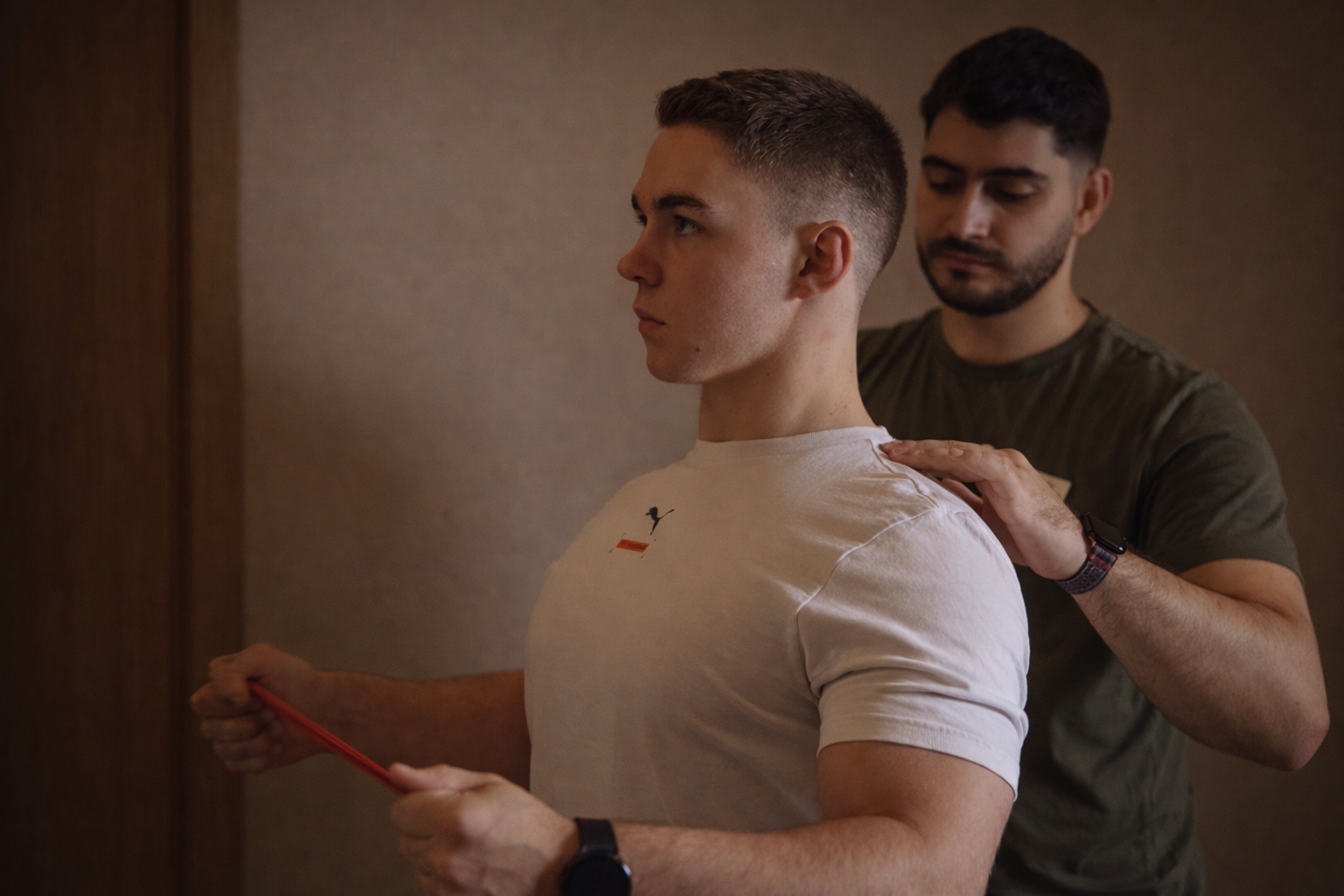
A specialized postural therapy method designed to restore alignment through precise, low-impact muscle activation; using resistance bands and individually tailored exercises.
Wellnest is currently the only wellness centre in the UAE offering this method, with practitioners trained directly by certified Spiral Stabilization instructors from the Czech Republic, where the system was developed.
It focuses on:
- Joint alignment — restoring balance across the hips, spine, and shoulders.
- Reactivating deep stabilizers — muscles often underused in sedentary lifestyles.
- Core strengthening — improving structural support from within.
- Spinal lift and decompression — reducing excessive pressure and restoring natural length through the spine.
- Symmetry and coordination — teaching both sides of the body to work together efficiently.
The Spiral Stabilization method retrains the body to move in balance, allowing postural alignment to improve naturally.
Corrective Exercises
Corrective exercises are designed to restore balance within the kinetic chain, rather than overload already stressed structures. They are delivered by practitioners with in-depth anatomical knowledge and a clinical understanding of how the body compensates.
They focus on:
- Reactivating weak or inhibited muscles that no longer contribute to posture and stability.
- Reducing overactivity in dominant muscles that compensate and hold tension.
- Improving joint positioning and control, particularly through the hips, spine, and shoulders.
- Re-educating movement patterns, so the body can maintain upright alignment without constant effort.
When applied correctly, corrective exercise allows posture to improve organically. The body stops “trying” to sit or stand straight and instead supports itself through efficient coordination and stability.
Manual Therapy
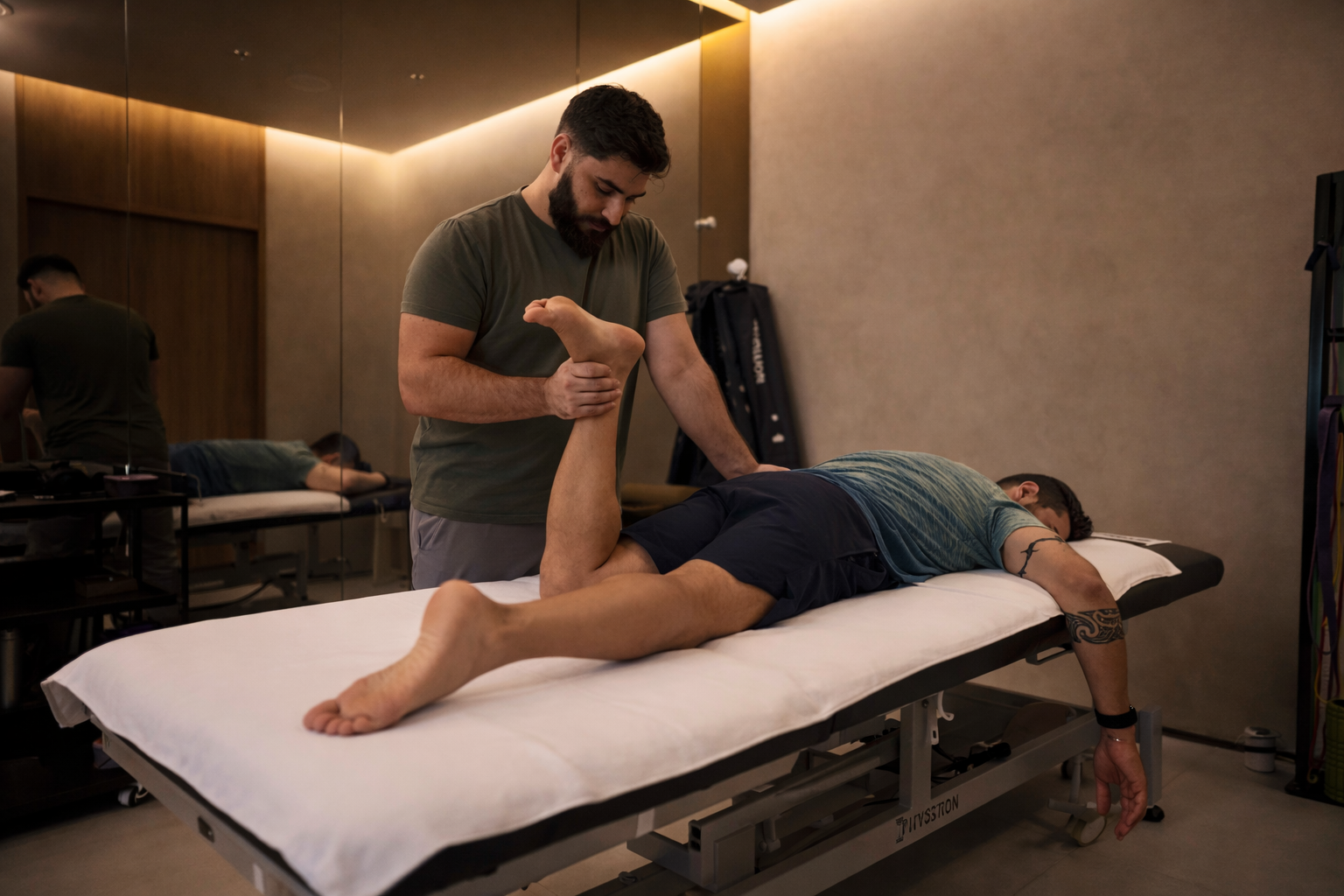
Manual therapy addresses structural and tissue-level restrictions that prevent posture from improving. Through hands-on techniques — including therapeutic massage, specialised fascial work, and targeted manual tools — it helps restore mobility, reduce tension, and support balanced alignment.
It works by:
- Releasing tight fascia and muscle adhesions that lock the body into compensatory positions
- Restoring joint mobility, allowing the spine, ribs, and pelvis to move freely.
- Supporting healing circulation and natural lymphatic flow within tissues.
By working on physical restrictions, manual therapy supports the conditions the body needs to respond to corrective exercises. Without this step, posture correction can feel like a constant effort — rather than a coordinated reset.
Conclusion: See The Bigger Picture
Posture improves with the right guidance and expert care.
With so much advice circulating on social media, it can be tempting to self-prescribe an at-home routine to “fix” your posture. But posture is individual — and without proper assessment, the real imbalances are often missed.
A professional evaluation helps identify how your body is truly functioning — looking at muscle activation, core stability, alignment, and weight distribution as part of a connected system.
Over time, muscle strength, balanced movement and structural support are what contribute to longevity — supporting you to live strong, move well, and stay active for longer.