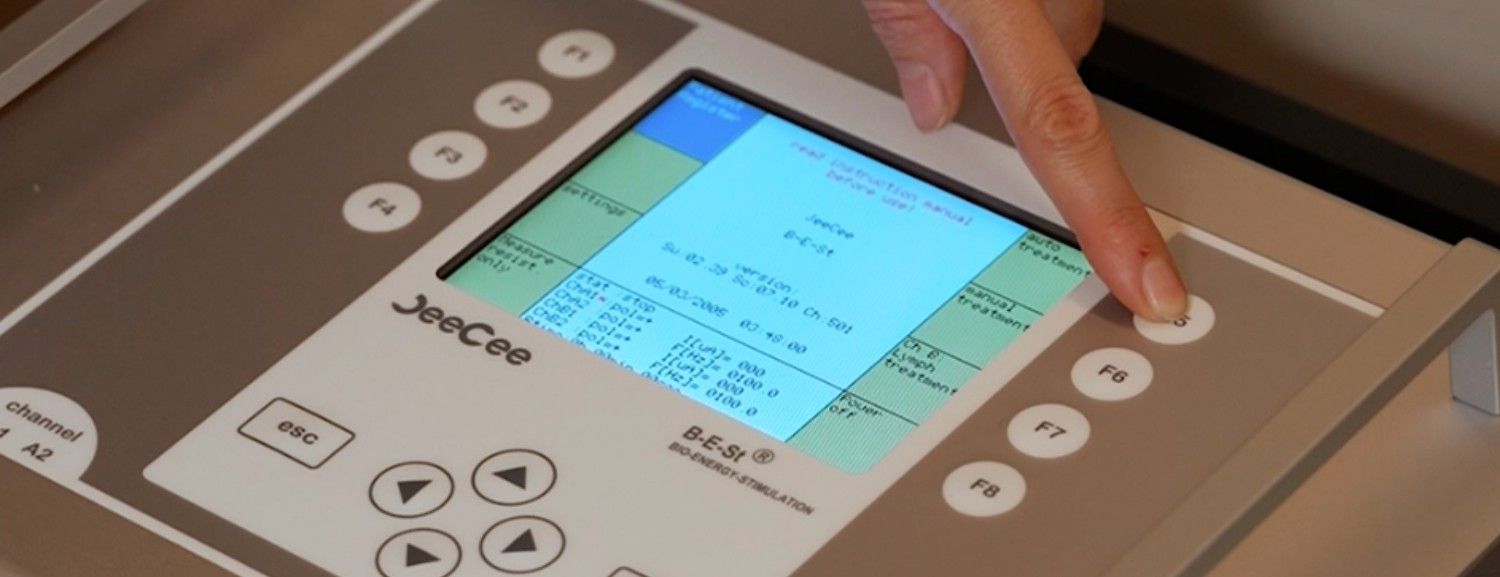
Pain relief is often the first goal, but achieving lasting improvement also depends on what is happening beneath the surface.
When muscles, tendons, ligaments, or other tissues become injured or overloaded, the body’s cells need enough energy to repair the damage. The B-E-St device supports this process using gentle microcurrent therapy designed to stimulate cellular energy, improve tissue function, and enhance the body’s natural healing response.
At Wellnest, the B-E-St device is used alongside hands-on pain treatments, including manual therapy, therapeutic bodywork, or sports recovery sessions.
What Is the B-E-St Device?
B-E-St stands for Bio-Energy Stimulation.
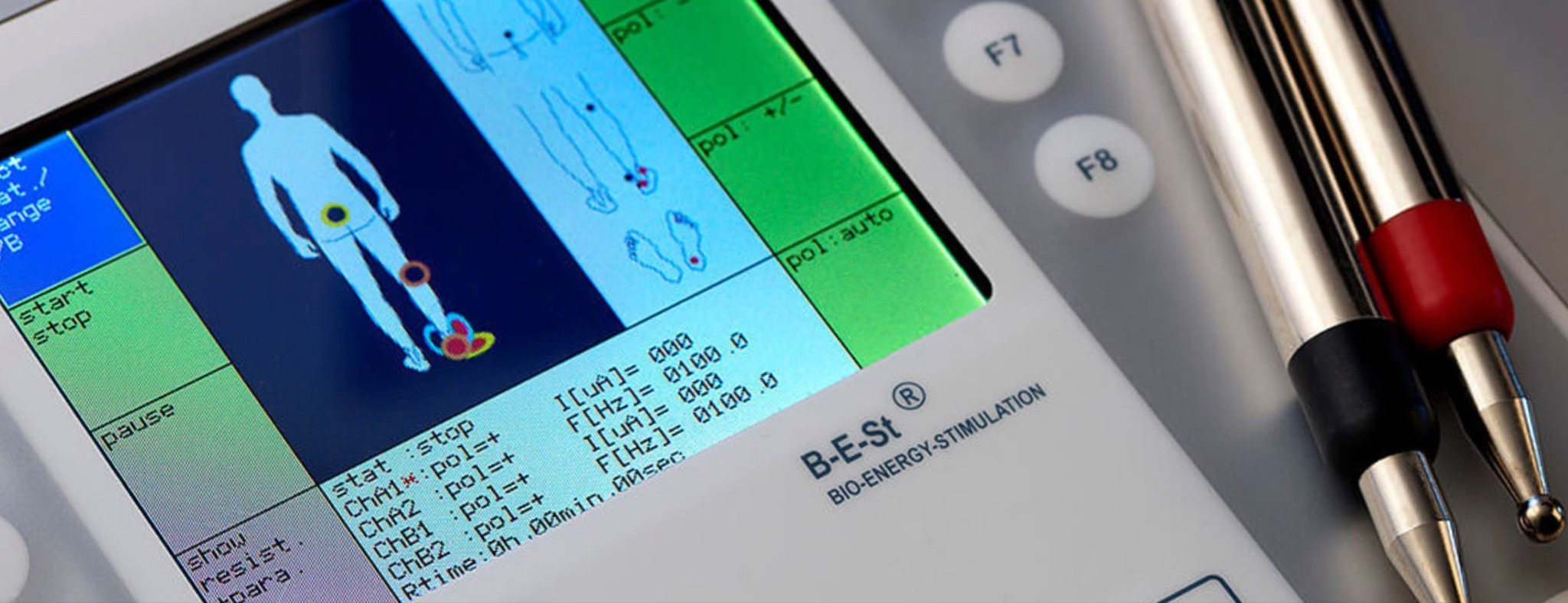
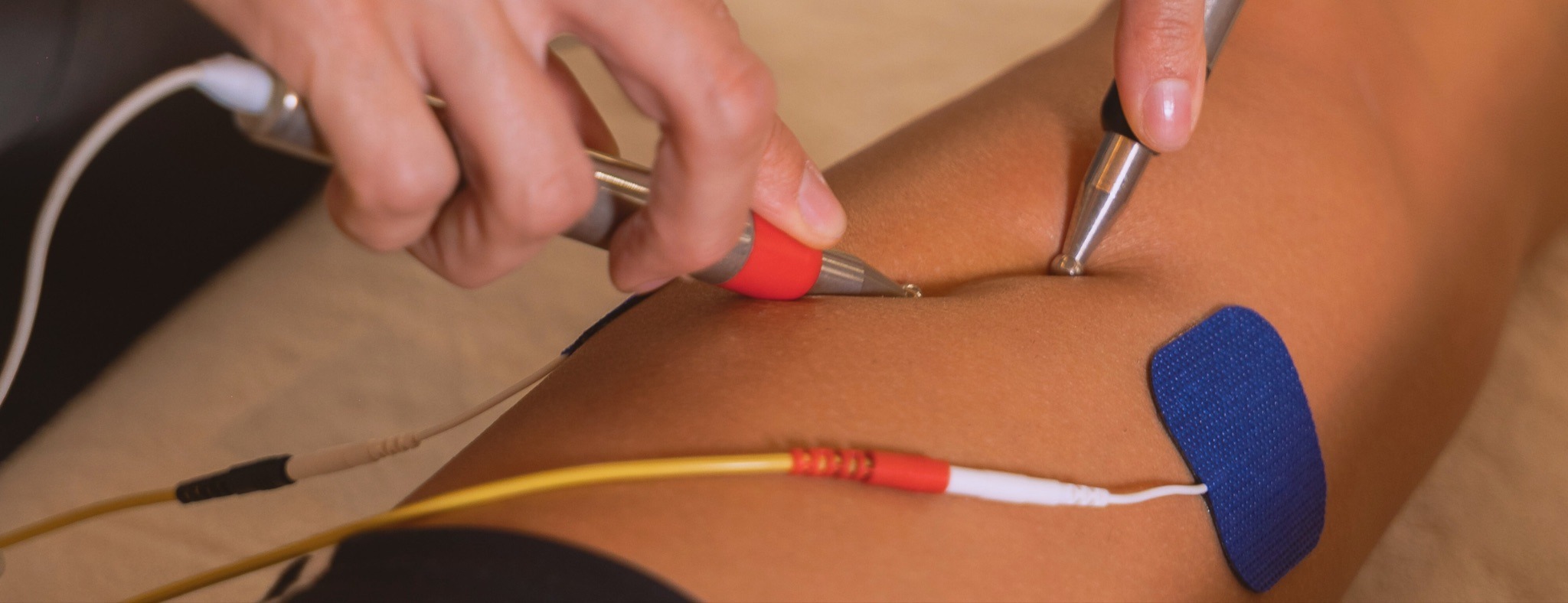
Developed by JeeCee, it is a microcurrent therapy device that delivers low-level electrical signals through electrode pads or conductive handheld tools. These currents are measured in microamps, millionths of an amp, and are designed to work with the body’s own natural activity.
The body already relies on electrical signals. They help nerves communicate, muscles move, cells transport nutrients, and damaged tissue organize its repair response.
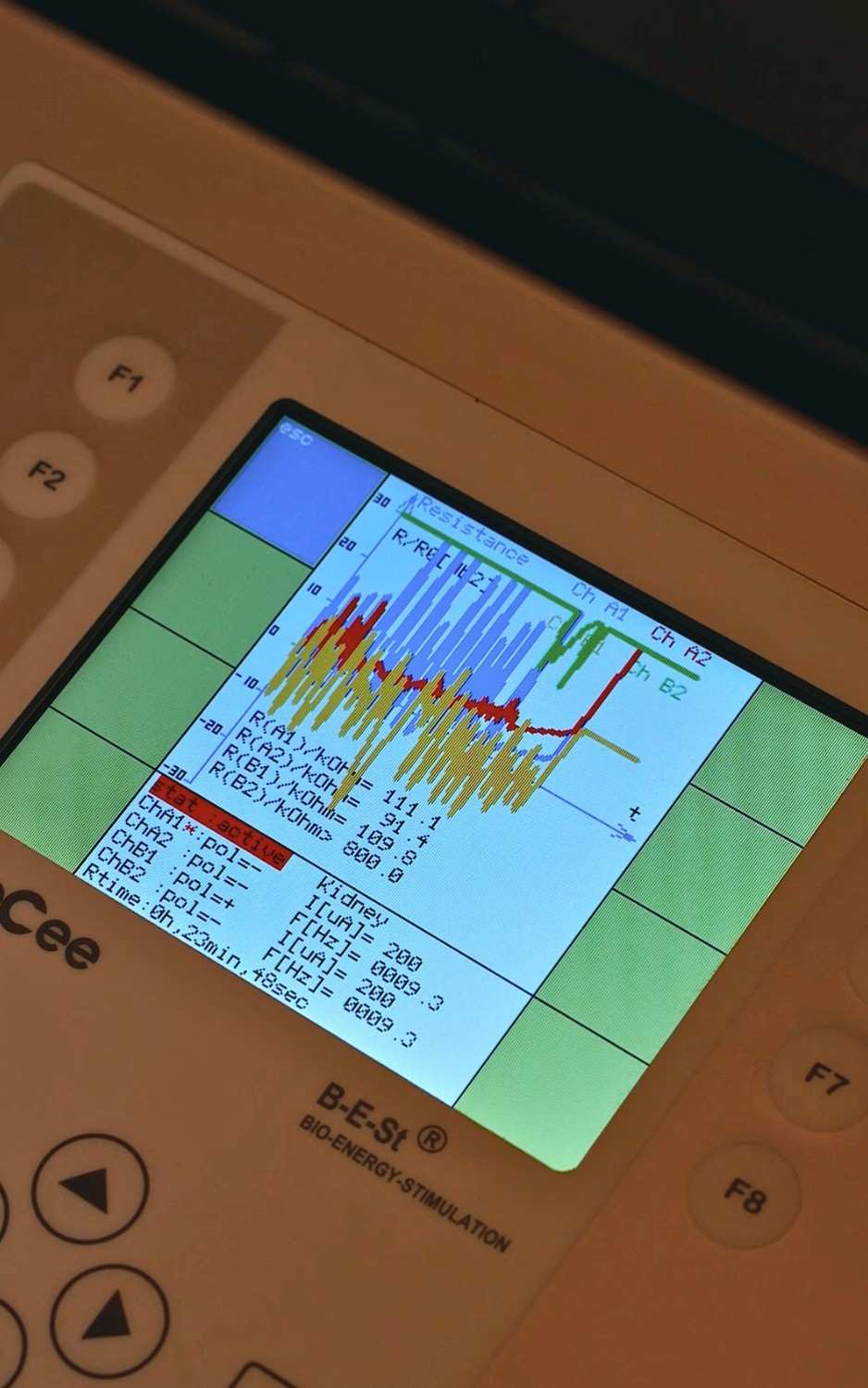
B-E-St delivers gentle, targeted currents across a range of frequencies to stimulate and enhance these processes without forcefully contracting the muscles or placing stress on painful tissue. The result is increased cellular energy, with ATP levels shown to rise by up to 500–800%.
How Does Microcurrent Therapy Support Healing?
When tissue is injured, the body creates a natural electrical current around the affected area. This bioelectrical activity helps guide cells toward the injury so they can begin rebuilding damaged tissue.
Microcurrent therapy is designed to reinforce this natural process.
The low-level currents support:
- Cellular energy production
- Protein synthesis needed for tissue repair
- Movement of nutrients into cells
- Removal of cellular waste
- Local blood flow and tissue oxygenation
- Cell communication and migration
- Pain and inflammation relief
- Regeneration of damaged tissue
Electrical stimulation has been studied for its effects on protein production, cellular transport, cell migration, tissue circulation, and wound closure. Clinical research has also found microcurrent therapy beneficial for wound healing and certain types of musculoskeletal pain.
Rather than only working on the sensation of pain, B-E-St supports some of the biological processes the body uses to restore the affected area.
What Are Mitochondria?
To understand how B-E-St works, it helps to look at what happens inside the cells.
Almost every cell in the body contains small structures called mitochondria. They are often referred to as the powerhouses of the cells because their primary role is to produce usable energy.
The mitochondria take oxygen and nutrients and convert them into a molecule called ATP.
Healthy mitochondrial function is particularly important during recovery. Repairing tissue, controlling inflammation, producing proteins, moving nutrients, and restoring normal cellular function all require energy.
Dysfunctional mitochondria also have been linked to fatigue, slower recovery, aging, and a range of diseases.
When cells are stressed, inflamed, or underperforming, their energy demands increase. Supporting mitochondrial energy production gives the cells more capacity to complete the work involved in healing.
What Is ATP and Why Does It Matter for Healing?
ATP stands for adenosine triphosphate. It is the main form of energy used by the body’s cells.
You can think of ATP as the energy cells spend to perform their work. Just as the body needs food to function as a whole, each individual cell needs ATP to complete its daily processes.
ATP fuels:
- Muscle movement and contraction
- Nerve signalling
- Blood circulation
- Temperature regulation
- Cellular cleansing and waste removal
- Protein production
- Cell renewal
- Tissue repair after injury or surgery
- The transport of nutrients across cell membranes
Healing is an energy-intensive process. When a muscle, tendon, or area of skin is damaged, the cells need ATP to produce new proteins, move nutrients, clear waste, regulate the repair response, and rebuild the tissue.
The more efficiently the cells can access and use energy, the better equipped they are to carry out these processes.
How Does B-E-St Increase Cellular Energy?
One of the most widely referenced studies on microcurrent therapy examined the effect of low-level electrical currents on ATP production, protein synthesis, and membrane transport.
The laboratory study found that specific microcurrent intensities increased ATP concentrations in rat skin tissue by approximately three to five times. It also found increased amino-acid transport and protein synthesis, both of which are directly involved in rebuilding tissue.
In simple terms, microcurrent gave the cells more available energy and improved their ability to absorb the materials needed for repair.
This explains why B-E-St can be useful when the aim is not simply to relax a tight muscle, but to support recovery within the tissue itself.
By stimulating mitochondrial activity and ATP production, B-E-St helps damaged or underperforming cells regain the energy needed to repair, regenerate, and return to healthier function.
Tailored Frequencies for More Targeted Treatment
The B-E-St device does not deliver one generic electrical signal.
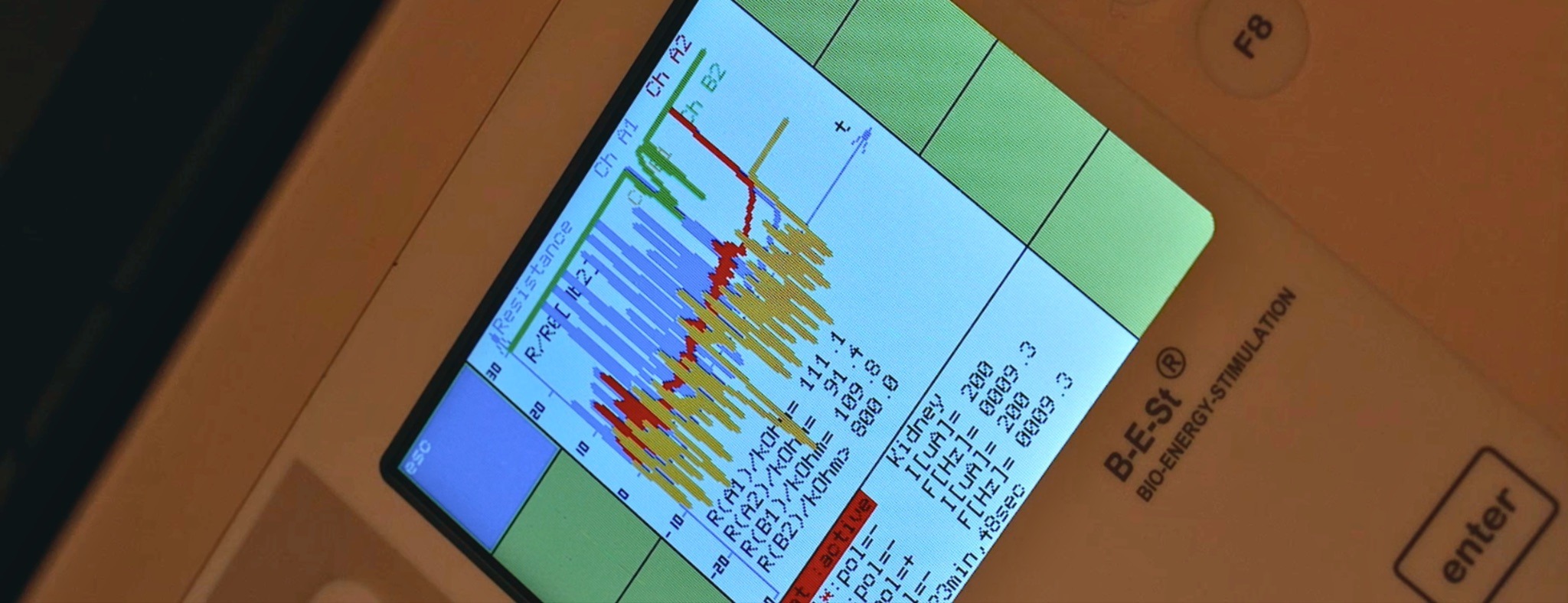
It includes pre-programmed treatments using different frequencies, allowing the practitioner to select a program based on the tissue, condition, and recovery goal.
Different cells and tissues produce their own patterns of electrical activity. Targeted frequencies are used to support cellular communication and stimulate the desired response in a particular area.
The treatment can be applied through pads placed around the affected tissue or through manual hand electrodes.
The hand electrodes allow the practitioner to combine microcurrent with hands-on techniques, making them particularly useful for:
- Soft-tissue release
- Scar-tissue treatment
- Muscle and fascia work
- Tendon and ligament recovery
- Detailed work around joints
- Areas of pain or restricted movement
This means the practitioner can work through the tissue manually while delivering microcurrent directly to the treatment area.
What Can B-E-St Therapy Help With?
B-E-St may be incorporated into a treatment plan for:
- Relieving muscle pain and joint discomfort
- Tendon and ligament injuries
- Accelerating post-workout recovery
- Swelling and inflammation
- Scar tissue or post-surgical tissue recovery
- C-section scar recovery
- Wound-healing support
- Supporting regeneration and mitochondrial health
Microcurrent therapy has shown particular value in wound healing, with reviews reporting improvements in wound area, healing time, and pain. Research has also found improvements in knee and shoulder pain compared with sham microcurrent treatment.
For sports recovery, it can be used to support fatigued or overloaded tissue following training, competition, or repetitive strain, and is widely used by professional athletes and sports physiotherapists.
How Is B-E-St Different From TENS?
Although both treatments use electrical currents, B-E-St microcurrent therapy is different from TENS.
TENS typically uses a stronger current to stimulate sensory nerves and interrupt the transmission of pain signals. The sensation is usually noticeable, and the main aim is temporary pain relief.
Microcurrents use much lower electrical intensities. Rather than primarily blocking the perception of pain, it is designed to influence cellular activity, energy production, tissue repair, and inflammation.
It can still help relieve pain, but it approaches pain through the condition and function of the affected tissue.
Combining B-E-St With Manual Therapy
B-E-St is particularly effective when used as part of an integrated treatment rather than as an isolated machine-based session.
Manual techniques help release restricted muscles or tight fascia and improve circulation, while Bio-Energy Stimulation supports cellular energy and helps accelerate the tissue-repair process.
Together, they create a more dynamic treatment that addresses both the physical restriction and the body’s internal recovery needs.
Is B-E-St Therapy Safe?
B-E-St uses gentle, non-invasive electrical currents and is comfortable and painless. Most clients feel no current or only a slight tingling.
As with other electrical therapies, B-E-St may not be suitable for everyone. Always inform your practitioner if you:
- Are pregnant
- Have a pacemaker or another implanted electrical device
- Have epilepsy
- Have an active infection or an open wound
- Have recently undergone surgery
- Are receiving treatment for a serious medical condition
Post-surgery, wound, and C-section scar treatments should only begin once the area has been assessed and medically cleared.
Natural Healing at the Cellular Level
Pain treatment and sports recovery are most effective when they address more than one layer of the problem, whether the concern is ongoing back pain, knee pain, or a sports-related injury.
By combining hands-on therapy with modern biohacking tools such as B-E-St, treatment can support both physical restrictions and the cellular processes involved in healing.
At Wellnest, a wellness center in Dubai, every session is tailored to the individual, combining targeted therapies to support pain relief, tissue repair, movement, and lasting recovery.
Book a Bio Energy Alignment session at Wellnest to experience B-E-St as part of a more modern and precise approach to pain treatment and overall cellular health.
Scientific References:
1. Microcurrent, ATP production, protein synthesis and cellular transport
Cheng et al., 1982 — “The Effects of Electric Currents on ATP Generation, Protein Synthesis, and Membrane Transport in Rat Skin”
https://pubmed.ncbi.nlm.nih.gov/7140077/
2. Microcurrent therapy for musculoskeletal pain
Iijima et al., 2021 — “Microcurrent Therapy as a Therapeutic Modality for Musculoskeletal Pain”
https://www.sciencedirect.com/science/article/pii/S2590109521000550
3. Microcurrent electrical stimulation for wound healing
Avendaño-Coy et al., 2022 — “Electrical Microcurrent Stimulation Therapy for Wound Healing”
https://pubmed.ncbi.nlm.nih.gov/34903470/
4. Physiological mechanisms of microcurrent therapy
Kolimechkov et al., 2023 — “Physiological Effects of Microcurrent and Its Application for Maximising Acute Responses and Chronic Adaptations to Exercise”
https://pmc.ncbi.nlm.nih.gov/articles/PMC9941239/
5. Electrical stimulation and the wound-healing process
Ud-Din and Bayat, 2014 — “Electrical Stimulation and Cutaneous Wound Healing”https://www.mdpi.com/2227-9032/2/4/445